4 Signs It’s Time to Try Shockwave Therapy for Stubborn Pain
You spent weeks icing your heel after every morning walk. You bought the padded shoe inserts, stretched your calf muscles religiously, and gave up your weekend runs to let that nagging elbow or knee rest. Yet, the moment you step out of bed or grab a heavy coffee mug, that familiar sharp ache flares right back up.
When standard home remedies and rest fail to fix an injury, it usually doesn't mean your body is broken. More often, it means the tissue-healing process has stalled.
That is where Extracorporeal Pulse Activation Technology (commonly known as EPAT or shockwave therapy) comes into play. By using high-energy acoustic sound waves to re-energize stubborn tissues, shockwave therapy helps kickstart your body’s natural repair mechanisms.
1. Your Pain Has Lingered for Months Without Improvement
In the initial days after an injury, your body triggers an acute inflammatory response to repair damaged fibers. However, when tendons and connective tissues are repeatedly stressed over long periods, that natural response can simply shut down before the tissue fully heals.
The Chronic Pain Cycle
This condition—usually referred to as chronic tendinopathy—occurs frequently in areas with low natural blood supply, such as the Achilles tendon, plantar fascia, patellar tendon, and rotator cuff. Because blood flow to these dense fibers is limited, the body struggles to clear out damaged cells and build healthy new collagen fibers. The result is a cycle of dull, persistent pain that drags on for three months or longer.
How Shockwave Therapy Helps
One of the primary benefits of shockwave therapy is its ability to “reset” this stalled recovery loop. The acoustic pressure waves create mild, controlled micro-trauma in the chronic tissue. This subtle stimulation wakes up your immune system, encouraging your body to send a fresh supply of blood, oxygen, and repair nutrients straight to the site of the injury.
2. Rest and Cortisone Shots Only Gave You Temporary Relief
It is a common story: you take two weeks off from physical activity, and the pain seems to subside. But as soon as you return to your normal routine, the ache returns immediately. Or perhaps you tried a cortisone injection, enjoyed a few pain-free weeks, and then watched the discomfort creep back once the medication wore off.
Cortisone vs. Tissue Repair
While cortisone injections and anti-inflammatory medications can calm down active pain signals, they do not repair the structural integrity of a damaged tendon. In fact, relying heavily on repeated cortisone injections can sometimes weaken tendon fibers over time. If your pain returns every time you try to get active again, masking the symptoms isn't addressing the underlying weakness.
How EPAT Physical Therapy Helps
Rather than hiding your pain, EPAT physical therapy targets the structural health of your connective tissue. The pressure waves stimulate cells called fibroblasts, which produce brand-new collagen fibers. Over a series of short treatments, this process helps rebuild stronger, more resilient tissue that can handle daily physical stress.
3. You Notice Stiff, Tender Knots or “Bony” Pain Points
Have you ever pressed on a specific spot along your heel, shoulder, or forearm and felt an intense, pinpoint tenderness? Or maybe your therapist mentioned that you have accumulated scar tissue or calcifications in an overused tendon.
Why Scar Tissue Causes Problems
When soft tissues heal inefficiently, the body often lays down disorganized scar tissue instead of smooth, flexible fibers. This thick, fibrous buildup limits your flexibility, restricts normal joint movement, and pulls on nearby nerve endings every time the muscle contracts. In conditions like chronic plantar fasciitis or shoulder tendinitis, small calcium deposits can even form within the tendon, making movement painful.
Breaking Down Tissue Tightness
Shockwave therapy uses targeted acoustic energy to gently disrupt dense, calcified tissue and tight myofascial trigger points. By breaking down these rigid adhesions, EPAT restores soft-tissue elasticity, improves overall mobility, and allows the surrounding muscles to move freely without pulling on damaged anchor points.
4. You Want an Effective Option That Doesn't Require Surgery or Downtime
When persistent tendonitis keeps you from working out, playing with your kids, or performing your job comfortably, it is easy to worry that surgery is your only remaining option. However, invasive procedures carry risks, high costs, and lengthy rehabilitation timelines that most people prefer to avoid if possible.
The Search for Non-Invasive Solutions
Finding a non-invasive treatment that fits into a busy work or family schedule can feel daunting. Many active adults need a solution that lets them stay mobile throughout their workweek without taking extended time off for recovery.
A Fast, Modern Approach
EPAT stands out as a completely non-invasive, quick treatment option. Sessions typically take just 5 to 10 minutes per targeted area, require no anesthesia, and leave no scars or surgical downtime. Because the therapy works alongside your body's natural physiology, you can walk right out of the clinic and continue your normal daily routine immediately following your visit.
What to Expect During an EPAT Session
If these signs sound familiar, integrating shockwave therapy into a comprehensive care plan can make a significant difference in your recovery speed.
During an EPAT session:
- Targeted Setup – Your physical therapist applies a special coupling gel to the painful area to help the sound waves travel smoothly into the tissue.
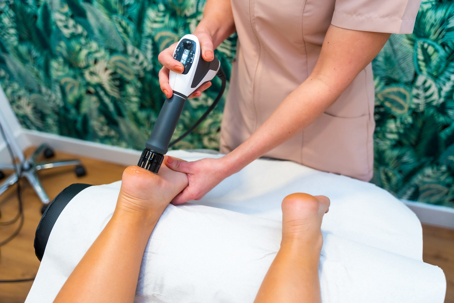
- Precision Application – A handheld applicator is guided over your tender spots, delivering calibrated acoustic pulses.
- Progressive Intensity – You will feel a rapid tapping sensation. Your therapist adjusts the intensity to ensure the treatment remains comfortable and tolerable for you.
- Holistic Care – EPAT is most effective when paired with targeted physical therapy exercises. Combined with tailored strengthening and movement re-education, shockwave therapy helps ensure that once your tendon heals, it stays healthy long-term.
Taking the First Step Toward Lasting Pain Relief
Lingering tendon pain shouldn't keep you stuck on the sidelines of your own life. Recognizing that rest alone isn't solving the problem is often the first step toward finding a treatment that actually repairs damaged tissue.
If you are ready to address chronic pain at its source and get back to moving without hesitation, our team is here to support you every step of the way.
Request an appointment today to schedule a comprehensive evaluation at ProFysio Physical Therapy and discover if EPAT shockwave therapy is the right choice for your recovery goals.